
















6 Contract Management Best Practices
Some contract management best practices include tracking contract obligations and team collaboration and visibility. Here are a few other best practices.

Table of Contents
- What is contract management?
- Consequences of poor contract management
- Benefits of contract management
- Six contract management best practices
- How to implement contract management best practices
- Measuring contract management success
- Common contract management challenges and solutions
- Get started with contract management best practices
- Frequently asked questions about contract management best practices
Want more content like this? Sign up for our monthly newsletter.
Key takeaways:
- Centralize all contracts in a single searchable repository and standardize templates with pre-approved language to reduce review time, minimize errors, and enable other departments to create routine contracts without legal involvement.
- Track contractual obligations systematically after signature to prevent the average 11% loss of contract value that occurs through invisible revenue loss and unnecessary costs during the execution phase.
- Start your contract management transformation with a single high-volume, low-risk contract type like NDAs to achieve quick wins that build momentum and secure leadership buy-in for broader implementation.
- Set specific, goal-oriented KPIs such as contract cycle time and self-service adoption rates to measure and prove the business impact of your contract management improvements to stakeholders.
Contract management best practices directly impact your organization’s revenue and risk profile. Poor contract management costs businesses over 9% of their annual revenue, according to World Commerce & Contracting research.
Implementing best practices transforms contracts from risk factors into growth drivers. Legal teams prioritize contracting efficiency because streamlined processes accelerate deals, reduce errors, and free up time for strategic work.
So how do you actually improve your organization’s contracting efficiency? The answer lies in implementing proven best practices that deliver immediate impact. Here’s what you need to know about contract management best practices you can start using right away.
What is contract management?
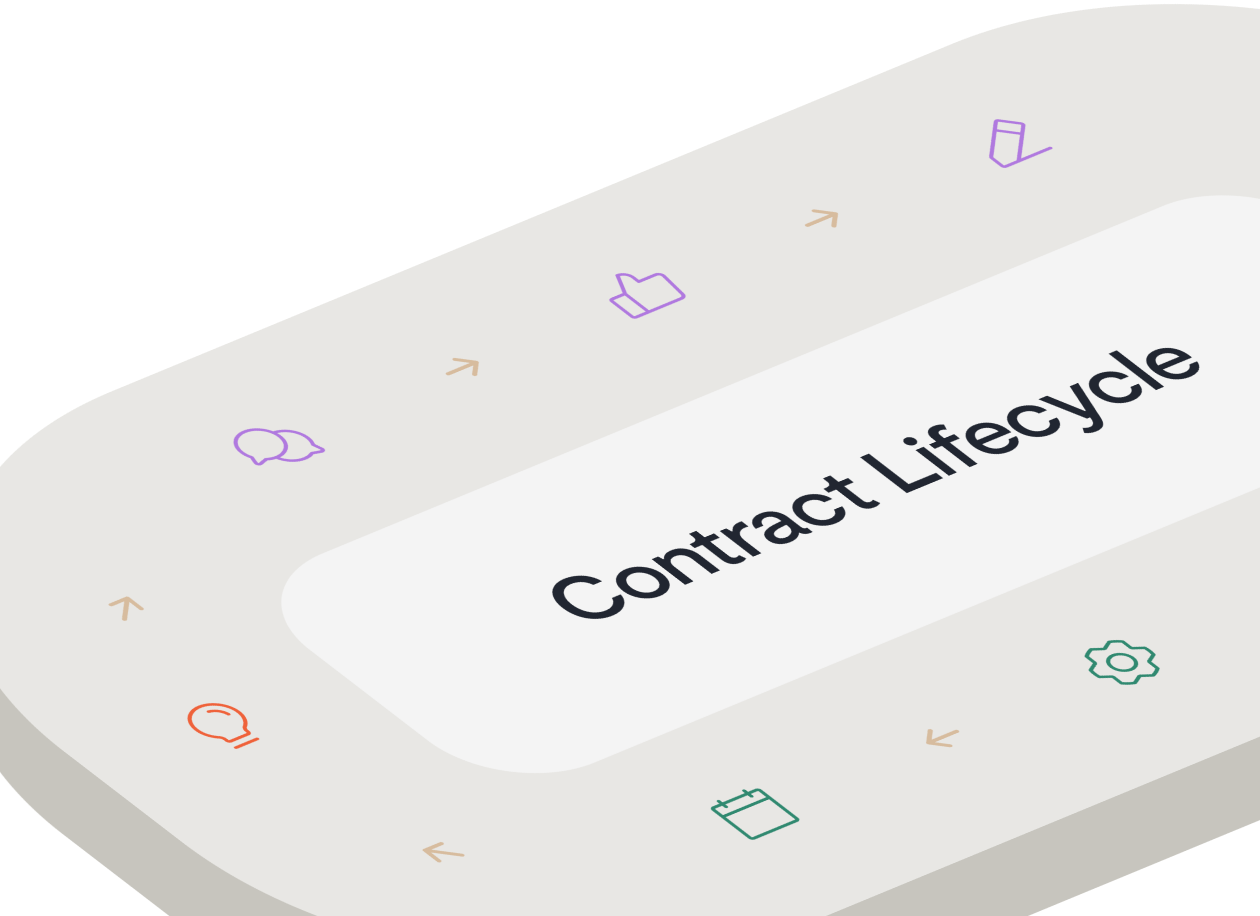
Contract management is the process of managing contracts from creation to execution and renewal. Your organization’s relationships with partners, vendors, customers, employees, and contractors all depend on these crucial business documents.
Effective contract management requires three core activities. First, you build systems that prevent contracts from stalling business operations. Second, you monitor compliance with contractual obligations and regulations. Third, you track and meet critical deadlines like contract renewals.
Consequences of poor contract management
Poor contract management makes your contracting process inefficient, and it has repercussions. Here’s the thing—these aren’t hypothetical risks. They’re the everyday reality for teams that haven’t implemented effective contracting processes.
Lost revenue
Contracting inefficiencies like slow negotiations, delays in approvals, and missing milestones are expensive. We said earlier that poor contracting costs businesses over 9% of annual revenue. In another report, 50% of business leaders said inefficiencies in their contracting process resulted in lost business opportunities.
Without a way to track deadlines automatically and get notifications to carry out time-sensitive actions, there’s the risk of missing deadlines. Missing deadlines may expose your organization to liability, like using a licensed intellectual property outside the period covered. Relying on employees to track these deadlines with spreadsheets is unreliable, as some contracts will inevitably be missed.
Inefficient collaboration and communication
Effective contract management requires high-level collaboration between both internal and external stakeholders. Using emails as a primary means of communication can quickly result in multiple confusing threads. During negotiations, contracting parties may forget to track changes during redlining. This can quickly lead to a situation where people are working with different contract versions.
Benefits of contract management
Contract management delivers measurable benefits across five key areas that directly impact your organization’s performance.
Improve organizational efficiency
Contract management automation increases organizational efficiency by eliminating manual work. This is critical when you consider that 92% of errors in contract management are human errors, according to The 2025 Legal Operations Field Guide. You can set up workflows with standard clauses for recurring contracts, use AI to accelerate counterparty review, store agreements in a secure searchable repository, and automate repetitive tasks that previously consumed hours of team time.
Mitigate risk
With proper contract management, you can monitor contract execution to ensure your organization fulfills its contractual obligations, whether they relate to deadlines, product or service delivery, or payment terms.
Your contracts contain information, some of which are protected by various privacy regulations. Contract management ensures unauthorized persons do not get access to contracts. Also, as new regulations come into force, you can easily bring existing contracts into compliance.
Minimize cost
With better contract management, your organization can spend less time contracting and less money on outside counsel. Also, when you maximize every contract renewal opportunity, whether to renew a contract or opt-out of an agreement that no longer serves you, it will result in cost savings.
Build profitable relationships
Defaulting on your contractual obligations doesn’t just cost you money if you are sued. There’s also reputational damage that can make potential partners wary of dealing with you. With good contract management, you will meet your obligations and build long-term business relationships with satisfied contracting parties.
Contract reporting
Contracts do not just spell out rights and obligations. They are dynamic documents that contain valuable data. With contract reporting, you can easily pull data from your contracts and gain insight into how you create, negotiate, execute, and manage contracts. Using spreadsheets to track and report on contract data like active contracts, contract amounts, milestones, and key timelines leaves a lot of room for error.
Six contract management best practices
Centralize and standardize agreements
Centralizing and standardizing agreements creates consistent contract language that reduces review time and minimizes errors. This best practice transforms contract creation from a custom drafting exercise into a streamlined selection process.
Standardize your contract templates to eliminate drafting from scratch. Pre-approve language and clauses for common agreement types so contracts can be generated quickly. This approach allows other departments to create routine contracts without involving legal, freeing up your team for complex negotiations.
Store all contracts in a central searchable repository for instant access. When contracts live in a single location, anyone can find what they need without digging through email threads or shared drives. You need advanced legal record management that shows:
Who accepted the agreement
The version of the agreement that was accepted
The date and time of acceptance
Set sensible key performance indicators (KPIs)
Setting the right KPIs helps you prove your contracting improvements are actually working. According to ACC’s law department benchmarking report, legal departments are under pressure to do more with less and prove their worth to the organization. To achieve this, legal must shift from being reactive (to legal threats) to proactive (strategizing ways to influence revenue and mitigate risk). This will require setting KPIs.
However, do not set KPIs just for the sake of doing so. The KPIs you should set and the metrics you should track depend on your goal. So, the first question is, “what do you want to improve?” For instance, your goal could be to send contracts out faster. You can then break this down into specific KPIs, like creating contracts faster and reducing approval time.
A good contract management solution will help you track performance metrics that provide insight into your contracting process and what you can improve on to become more efficient.
Tracking obligations
After a contract is signed, the focus shifts to fulfillment—making sure you deliver on what you agreed to. Many people sign contracts and forget about them until there’s an issue. However, contracts become more important after they are signed. In fact, organizations lose an average of 11% of contract value after signature via the often-invisible loss of potential revenue and unnecessary costs, according to the 2026 Contracting Benchmark Report. Your organization has obligations you need to track to ensure you fulfill them, and in a large organization, there can be thousands of active contracts.
Your contracts need to be easily accessible to fulfill your contractual obligation. You can’t track or monitor the execution of a contract you cannot locate.
Relying on individual employees to track obligation is risky as errors are inevitable. Good contract management software can help you stay on top of your obligations by sending you timely email reminders before they are due.
Team collaboration and visibility
Contract management is mostly the responsibility of legal in most organizations, though only 55.4% of legal operations teams actively manage their organization’s contracts according to Deloitte. But, for legal to ensure compliance and reduce risks across the entire organization, it needs to collaborate efficiently with other departments. When legal is a bottleneck to getting deals done, it doesn’t help anyone.
The legal team must stop working in isolation and make legal information available to those who need it. Empowering other departments with standard templates and workflows reduces your need to be involved in everything. The impact of this connectivity is measurable—teams that integrate their contract management software with systems of record like Salesforce see 50% less counterparty paper usage and 33% less legal involvement, according to the report. You can use contract management software to ensure that contracts get legal’s approval before they are sent out.
Legal also needs to make contracts visible without sacrificing data security. The right contract management software will enable you to balance visibility and control by helping you define who can access each workflow and record.
Automate communications
Using email for contract communication is inefficient and risky, as important information can get lost in confusing, decentralized threads. You may forget to include the address of a relevant party when passing information, or important information may hide in email threads.
The best practice is to use a contract lifecycle management software (CLM) that tracks every activity and sends real-time notifications to relevant stakeholders. Automating your communications ensures no stakeholder is left behind in all contract stages.
Clickwrap and a variety of signing options
Getting contracts signed without delay is still a challenge for many legal departments. Apart from the traditional wet ink signature, there are other ways of getting contracts signed. Electronic signature and clickwrap have been widely adopted as valid ways of signing contracts online.
Contracting parties now expect a seamless signing experience. Clickwraps and electronic signatures deliver that. Clickwrap makes signing contracts as easy as a click, and it’s ideal for high-volume contracts like website Terms and Conditions.
Contract management solutions like Ironclad allow you to embed your contracts into the user’s transaction flow, reducing the friction inherent with PDF or paper contracts.
How to implement contract management best practices
Alright, so you know the “what” and the “why.” Now for the “how.” This is where people usually get stuck, but it doesn’t have to be complicated. You don’t need to solve every problem at once.
Start with one thing—a single, high-volume, low-risk contract type is perfect. Think NDAs. Get that process automated and running smoothly. This gives you a quick win you can show to leadership and other teams. Once people see it working and making their lives easier, getting support for the next phase is a whole lot simpler. Then, you can apply the same process to other agreements, expanding to more complex types as you build momentum.
Measuring contract management success
If you can’t measure it, you can’t prove it. It’s that simple. When you’re trying to show leadership that this new system or process is worth the investment, you need to use data to demonstrate its value.
Start tracking a few key metrics. How long does it take to get a contract from request to signature? That’s your cycle time. How many contracts are your business teams creating themselves versus sending to legal? That’s your self-service adoption. Are you seeing fewer non-standard clauses? That’s risk reduction. These numbers tell a story that’s a lot more powerful than just saying “things feel faster.”
Common contract management challenges and solutions
In reality, this stuff isn’t always easy. Change is hard, and you’re going to hit some bumps. The most common one? People resisting the new way of doing things. The best way to handle that is to find their biggest frustration—like chasing signatures for weeks—and show them how the new process fixes it.
Another big one is dealing with all your old contracts. Don’t try to import and tag everything at once. Prioritize the most active or highest-risk agreements first. The key is to acknowledge the challenges are real and tackle them one by one, not pretend they don’t exist.
Get started with contract management best practices
Start implementing contract management best practices by assessing your current processes and identifying one high-impact area for improvement. Most organizations begin with contract standardization or centralization because these changes deliver quick wins that build momentum for broader transformation.
When you implement these best practices systematically, the results speak for themselves. Take Bitmovin, a multimedia tech company that saved $400,000 in outside counsel fees and cut contracting costs by 75% using Ironclad’s CLM platform. They did this by centralizing their contracts, standardizing templates, and automating their approval workflows—exactly the kind of best practices we’ve been talking about.
Ironclad’s platform helps you implement contract management best practices at all contracting stages. Request a demo and start your journey to mastering contract management.
Frequently asked questions about contract management best practices
What are the key steps in an effective contract management process?
The process consists of a few core stages: creating the contract (ideally from a template), negotiating and redlining with the other party, getting it approved and signed, and then storing it so you can track obligations and renewals. A good process automates as much of that as possible.
How do you measure the success of contract management best practices?
You look at things like contract cycle time—how fast you close deals. You also track user adoption to see if people are actually using the system. And you can measure risk by seeing how often non-standard terms are used. The goal is to turn your efforts into numbers that show business impact.
How long does it take to implement contract management best practices?
This really depends, but you can see results faster than you think. If you start with a simple, high-volume workflow like an NDA, you can have the new process live in a few weeks. A full, enterprise-wide rollout will take longer, but the key is to get quick wins early to build momentum.
What are the most common contract management mistakes to avoid?
The biggest one is trying to do everything at once. Don’t try to automate every contract type at the very beginning. Another mistake is not getting buy-in from other teams like sales or procurement early on. If they don’t feel involved, they won’t use the tools you build.
What’s the difference between contract management and contract lifecycle management?
Think of it this way: contract management is the “what”—the overall process of handling contracts. Contract lifecycle management, or CLM, is the “how”—it’s the technology platform that automates and connects all the stages of that process, from creation to renewal.
Ironclad is not a law firm, and this post does not constitute or contain legal advice. To evaluate the accuracy, sufficiency, or reliability of the ideas and guidance reflected here, or the applicability of these materials to your business, you should consult with a licensed attorney. Use of and access to any of the resources contained within Ironclad’s site do not create an attorney-client relationship between the user and Ironclad.