













Contract Data Extraction: Bringing Contracts to Life
When our legal analysts perform contract data extraction, they tag and categorize data points for easy viewing. Learn how to use this data to make decisions.

Table of Contents
- What is contract data extraction?
- Why contract data extraction matters for modern businesses
- What is contract metadata?
- Key features and capabilities of contract data extraction tools
- How to implement contract data extraction
- AI and automation in contract data extraction
- Using contract data analysts to surface business-critical metadata
- Bring contracts out of the filing cabinet and into the digital age
- Using your newfound metadata
- Transform your contract management with modern data extraction
- Frequently asked questions about contract data extraction
Want more content like this? Sign up for our monthly newsletter.
Key takeaways:
Start your contract data extraction implementation by identifying the 5-10 most critical data points that solve immediate business pain points rather than attempting to extract every possible contract element at once.
Combine AI extraction tools with human expertise to maximize accuracy and efficiency, using AI to handle the first 80-90% of analysis for ongoing contracts while contract data analysts review legacy documents and validate complex terms.
Transform extracted contract metadata into actionable business intelligence by tracking approval bottlenecks, identifying negotiation patterns, benchmarking team performance, and reusing proven language to reduce contract cycle time and inform strategic decisions.
Recognize that contract data extraction fundamentally differs from simple keyword searches by converting unstructured contract text into structured, reportable data fields that enable portfolio-wide analysis, automated workflows, and integration with other business systems.
Contract data extraction is the process of identifying and pulling key information from contracts—like renewal dates, payment terms, and obligations—into searchable, analyzable formats. This transforms static documents into actionable business intelligence.
Legal teams handle contract negotiations and manage obligations, but manual analysis can’t keep pace with contract volumes—59% of CLOs say workloads increased last year alone. Even the most diligent lawyer needs efficient technology to ensure contracts are properly analyzed and their critical details are accessible when decisions need to be made.
Modern contract management software gives legal teams on-demand access to contract metadata. This extracted data helps you make faster, more informed decisions.
Contract data extraction identifies critical information across your agreements. Renewal dates, indemnification obligations, governing law, payment terms—all become instantly searchable instead of buried in documents. You can analyze a single contract or scan hundreds at once to spot patterns and risks.
The result is a streamlined contract process built on accessible data rather than manual document review.
What is contract data extraction?
Contract data extraction transforms static documents into searchable business intelligence. Instead of reading through hundreds of pages to find a renewal date or liability cap, you can instantly locate any term across your entire contract portfolio.
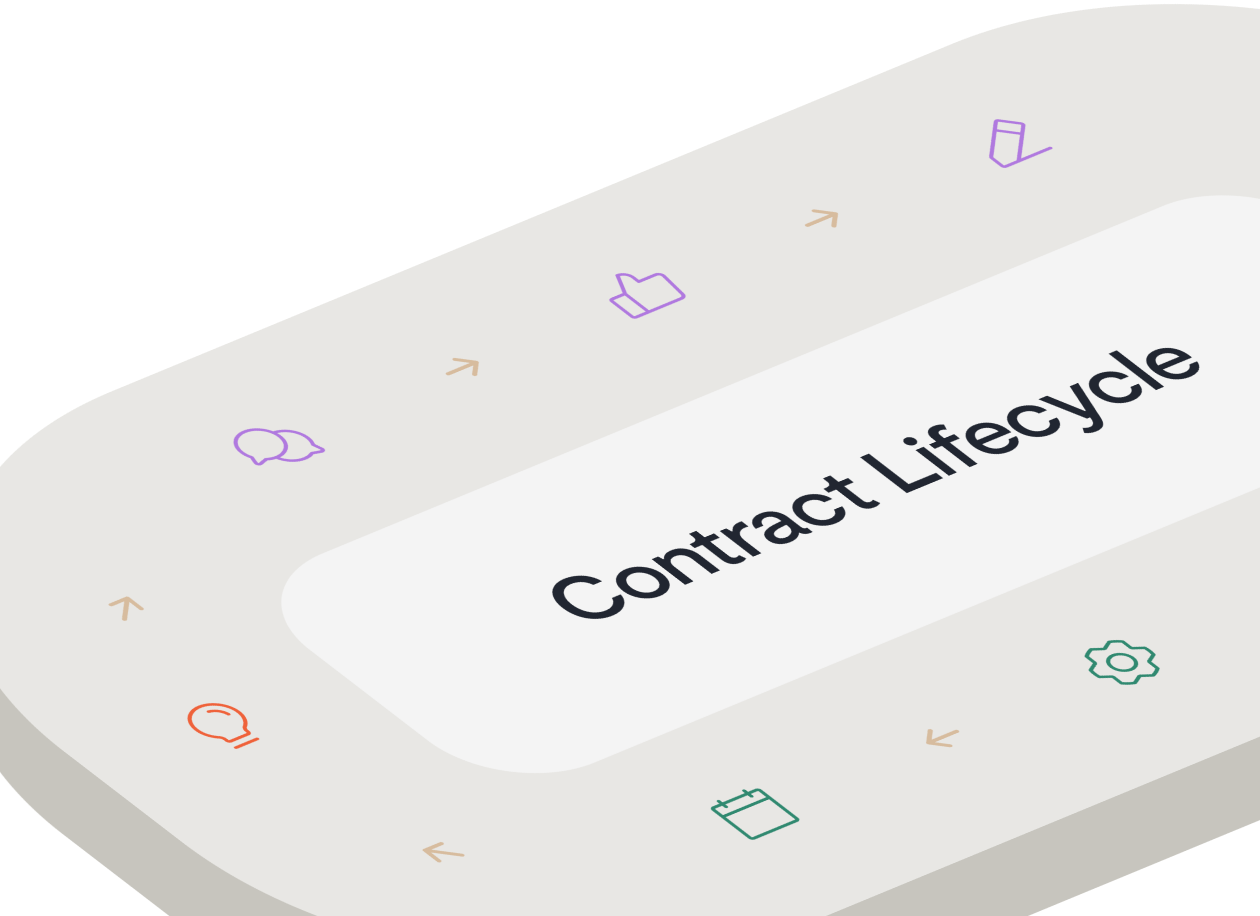
Here’s how it works in practice. When you complete a contract using modern contract lifecycle management (CLM) software, the system automatically extracts and tags key metadata. Every agreement gets stored in a centralized repository where its data becomes immediately searchable and analyzable.
The software tracks information across your contract lifecycle to identify:
Bottlenecks at each stage that slow down deals
Patterns in redlines that signal negotiation friction
- Timeline data showing how long contracts spend in review
Party-specific preferences that inform future negotiations
Reusable template language that reduces drafting time
This metadata becomes the foundation for continuous improvement. You can spot problems, measure progress, and optimize your entire contracting process based on actual data rather than assumptions. The impact of this visibility is undeniable. According to The Legal AI Handbook, 100% of legal analytics users find the technology valuable, with 69% specifically pointing to improved efficiency as their primary driver.
Why contract data extraction matters for modern businesses
The truth is that data extraction isn’t really about organizing files or making your shared drive look tidier. It’s about making your business smarter, faster, and safer. When you don’t know what’s inside your agreements, you’re flying blind. You’re missing renewal dates, leaving money on the table, and agreeing to risks you don’t even know exist.
Here’s the reality: every contract is a bundle of data—dates, dollar amounts, obligations, and liabilities. When that data is locked away in a PDF, it’s useless. When you extract it, you turn static documents into active intelligence. This shift toward data-driven visibility is exactly why The State of AI in Procurement 2025 Report found that 80% of procurement teams now use AI during contracting, rating its overall impact at an impressive 8.24 out of 10. You can finally answer basic questions like, “Which of our agreements auto-renew in the next 90 days?” or “How many of our vendor contracts have a limitation of liability below $1 million?” Without data extraction, answering those questions is a painful, manual fire drill. With it, it’s a simple report.
What is contract metadata?
Contract metadata is structured information about your agreements—effective dates, renewal terms, parties involved, financial obligations, liability caps, and governing law. This data exists in every contract but remains trapped and unusable until you extract it into searchable formats.
Legacy contracts and basic storage systems can’t surface this critical information on demand. You have to open each document and search manually. Contract data extraction changes that by automatically identifying and tagging metadata across your entire contract portfolio.
Once extracted, this metadata enables you to:
Search repositories instantly for relevant precedent language
Track consistency in terms across different agreements
Monitor upcoming renewals and obligations automatically
Make strategic decisions based on historical contract performance
Generate executive summaries without reading full documents
The difference is moving from “I think we have language for that somewhere” to “Here are the five times we’ve negotiated this clause in the past year.”
New contracts created in Ironclad’s digital platform will do all of this for you moving forward. But what about all those contracts you’ve already created? A team of legal analysts will be able to extract metadata, even from your oldest contracts. This allows you to treat all of your contracts like new, taking advantage of deadline reminders and data that can help you prepare for renegotiations and comply with regulations.
Key features and capabilities of contract data extraction tools
If you’re starting to look at tools to help with this, it’s easy to get overwhelmed by feature lists. Let’s cut through the noise. Here’s what actually matters:
AI analysis: You need a tool that does more than just search for keywords. Modern systems use AI to understand the context of a clause, identifying things like renewal dates or indemnification language even when the wording isn’t exactly the same every time.
A central, searchable repository: The whole point is to get your contracts out of emails and scattered folders. A good tool gives you one place to find everything, with powerful search that lets you filter by any piece of data you’ve extracted.
Automated workflows: Extraction is just the first step. The real power comes when you can build workflows around that data. Think automated alerts for upcoming expirations or routing a high-value contract to the finance team for review.
Integrations with other systems: Your contracts don’t live in a vacuum. The data needs to connect with your other tools, like Salesforce or your ERP, to be truly useful. This avoids manual data entry and keeps everyone on the same page.
How to implement contract data extraction
Alright, so you’re convinced this is a good idea. How do you actually do it without it turning into a year-long project that everyone hates? The key is to not try and boil the ocean.
First, figure out what questions you need to answer most urgently. Don’t start by trying to tag 100 different data points. Pick the top five or 10 that will solve a real pain point, like tracking termination for convenience clauses or auto-renewal dates. This gives you a quick win.
Next, tackle your legacy contracts. You have a few options here: you can use a tool with AI to do the heavy lifting, or you can have a team of analysts (human or outsourced) go through them. The best approach is usually a mix—let AI do the first pass, and have a human review its work. Once your old contracts are in the system, you can set up workflows to automatically extract data from all new contracts as they come in. This is how you move from a one-time project to an ongoing business process.
AI and automation in contract data extraction
Trying to do this manually is a non-starter. The volume of contracts at any growing company makes it impossible. This is where AI becomes your most valuable player—Gartner projects 50% of organizations will use AI-enabled contract risk analysis tools by 2027. In fact, according to The State of AI in Legal 2025 Report, 28% of legal professionals already identify contract review as their most impactful AI use case, and 57% report that the technology successfully frees up their time for higher-level strategic work. It’s the difference between a searchable PDF and true, structured data.
An AI system doesn’t just find the word “renewal.” It understands that “this agreement shall automatically extend for successive one-year periods” is a renewal clause. It can identify the effective date, the governing law, and the payment terms, and then structure that information as data fields you can report on. This is what allows you to move from simply storing contracts to actually understanding them at scale.
Using contract data analysts to surface business-critical metadata
Now, while AI handles the heavy lifting for ongoing contracts, there’s still the challenge of your existing contract archive. Contract data extraction works seamlessly for new digital contracts, but most organizations have years of legacy agreements sitting in filing cabinets or basic PDFs. These contracts contain valuable business intelligence that’s completely inaccessible without manual review.
A single attorney might spend hours analyzing one contract. Multiply that across hundreds or thousands of legacy agreements, and the task becomes impossible. Legal professionals don’t have the bandwidth to extract data from massive contract archives while also handling their current workload.
This is where contract data analyst teams provide a practical solution. Trained professionals can systematically review your legacy contracts and extract the critical metadata you need—without overwhelming your legal team.
Keeping up with contracting data is daunting, especially if you have a small legal team. A dedicated analyst team can take this pressure off your legal team, using the extracted data to create more efficient processes going forward. These teams are often composed of trained law students who can provide accurate and usable contract data, helping you convert legacy systems and integrate them into a digital platform. This well-prepared team can handle an overwhelming amount of your data without you having to hire extra employees, helping you convert legacy systems and integrate them into a digital platform.
Bring contracts out of the filing cabinet and into the digital age
The goal of using a data analyst program is to get error-free, high-quality data from your contracts. Analysts review legacy contract sets and tag key contracting data per your specifications. This analysis of pre-digital contracts can help you improve your business model with modern efficiency previously unavailable to anyone using paper or archaic digital formats.
Every customer specifies the data they need. Your team can also get help to identify the data you should be focusing on. Some of these data points include:
Total contract value
Exclusivity terms
Ability to terminate for convenience
Auto-renewal or opt-out notification periods
PII exchange
Counterparty address region
Once this data is extracted by a legal analyst team, all data points are tagged and categorized for easy viewing. Grouping similar data together allows anyone to interpret that information without a need for training. Your employees can use this data to make informed decisions about how to improve processes and streamline your existing contract lifecycle management (CLM).
This information is uploaded to the Ironclad system and organized within the Digital Repository. Every contract is stored in this convenient location, where it’s always accessible, along with relevant metadata useful to your future business plan. You’ll have on-demand access to business-critical information at any given time.
Using your newfound metadata
Once you have all this structured data—whether from AI extraction, analyst teams, or a combination of both—the real value starts to emerge. Even legacy agreements from decades ago contain patterns and intelligence that inform better business decisions today.
The challenge isn’t whether old contracts hold value. It’s systematically extracting that value without overwhelming your team. Professional data extraction services can pull metadata from pre-digital contracts and integrate it into your current CLM system.
Once you have searchable metadata across your contract portfolio, you can:
Identify approval bottlenecks by tracking average time at each stage
Spot negotiation patterns that predict successful deal outcomes
Benchmark your team’s performance against industry standards
Reduce contract cycle time by reusing proven language
Anticipate client concerns based on past negotiation history
Catch recurring errors before they become costly problems
This transforms contracting from a document management problem into a strategic advantage built on institutional knowledge.
Transform your contract management with modern data extraction
Ultimately, your contracts are one of the most valuable, untapped data sources in your company. Leaving that data locked in static documents is a huge missed opportunity—Deloitte and WorldCC found average contract value erosion is 8.6% across organizations.
It’s about turning the legal team from a perceived bottleneck into a strategic partner. When you can proactively manage risk, identify cost savings, and help the sales team close deals faster, you’re not just managing contracts—you’re adding real value to the bottom line. If you’re ready to see how this works in practice, request a demo today.
Frequently asked questions about contract data extraction
What are the different types of data extraction?
Broadly, you’ll hear about three types. Structured extraction pulls data from neatly organized sources, like a database. Unstructured extraction, which is what’s used for contracts, pulls data from free-form text like a Word doc or PDF. Semi-structured is somewhere in between. For contracts, you’re almost always dealing with unstructured data.
Can AI really analyze a contract accurately?
Yes, but with a caveat. A good AI model trained on legal language can be incredibly accurate at identifying standard clauses and data points. However, it’s not a replacement for a lawyer’s judgment on complex or unusual terms. The best approach is to use AI as a powerful assistant to do the first 80-90% of the work, with a human expert handling the final review and strategic decisions.
How is this different from just using Ctrl+F to search a PDF?
The difference is significant. A simple search can only find exact keywords. It can’t tell you that “termination for cause” and “breach of contract” are related concepts. It also can’t pull all your effective dates from 1,000 different contracts into a single report. Data extraction turns the text into structured, reportable data fields, which is something a simple search can never do.
Ironclad is not a law firm, and this post does not constitute or contain legal advice. To evaluate the accuracy, sufficiency, or reliability of the ideas and guidance reflected here, or the applicability of these materials to your business, you should consult with a licensed attorney. Use of and access to any of the resources contained within Ironclad’s site do not create an attorney-client relationship between the user and Ironclad.